In the nonprofit world, expressing gratitude for your donors’ gifts is not only polite, but essential to your long-term success. Donor recognition is a critical piece of the donor retention puzzle that helps secure lasting support for your organization’s mission.

After marketing your campaigns and events like a pro and driving results in your fundraisers, there’s still important follow-up work to do to keep your nonprofit’s momentum going. Donor recognition solidifies your donors’ support and leaves them much more eager to get involved in your future work.

In this guide, we’ll share some best practices and ideas for donor recognition by answering some basic questions you might have:

Having a concrete strategy in place for how you thank your donors, along with an arsenal of effective recognition ideas, will go a long way to strengthen support for your mission over time. Let’s get started!

What Is Donor Recognition?

Donor recognition refers to the practice of thanking your nonprofit’s donors for contributing in support of your mission. Depending on your goals, donor contact preferences, and resources, this can take many forms, from thank-you notes to appreciation events. Regardless of how you approach it, though, an effective donor recognition strategy will ensure that you cultivate strong and reliable donor relationships in the long run.

Your nonprofit’s supporters engage with your organization because they want to contribute to the change you’re powering in the community. The more you emphasize the role they play in this change, the more invested they’ll be in contributing financially and spreading awareness of your work.

Why Is Donor Recognition Important?

Donor recognition is a key component of your nonprofit’s larger donor relations strategy. Building relationships with donors helps to create the strong support network necessary for your organization to achieve your fundraising goals and further your mission.

Here are some of the specific benefits of donor recognition:
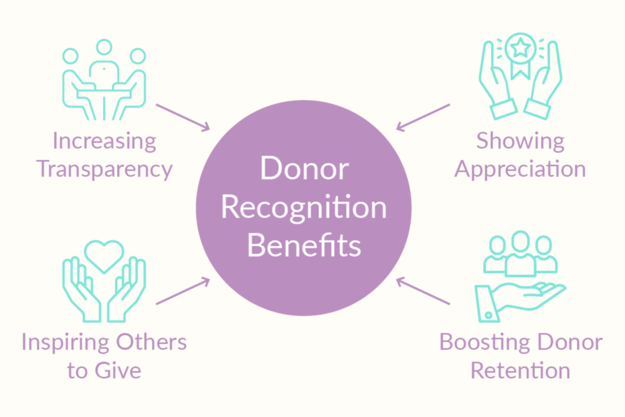
This mind map shows four donor recognition benefits: appreciation, retention, inspiring others, and increasing transparency.

  • Showing appreciation. Probably the most obvious purpose of donor recognition is to let donors know you’re grateful for their support, no matter how much they’re able to give. This helps donors feel like your organization values them and that they’re making a difference with their contributions.
  • Boosting donor retention ratesDonors who feel appreciated are more likely to give to your nonprofit again, allowing you to bring in more reliable funding year after year. Although your organization will sometimes need to reach out to new donors to grow, focusing more heavily on donor retention is more cost effective and less time consuming for your team.
  • Inspiring others to give. Recognizing your donors publicly can motivate potential supporters who are on the fence about giving to your nonprofit to take the first step. And don’t underestimate the value of word of mouth—if donors share their positive donation experiences with their friends and family, you may gain new supporters!
  • Increasing transparency. Donor thank-you messages provide the perfect opportunity to share concrete examples of how your organization plans to use the contributions you bring in to further your mission. This accountability builds trust with donors and improves your nonprofit’s reputation as an organization that follows through on its promise to make a positive impact.

To make the most of these benefits, make sure to recognize all contributions to your nonprofit—large or small, one-time or recurring. Over time, you’ll be able to create a dedicated community of supporters that not only give regularly but also engage with your organization in other ways, such as volunteering, attending events, or advocating for your cause.

What Are Some Best Practices for Donor Recognition?

Make the most of your organization’s time and resources by employing a thoughtful donor recognition strategy tailored to your donors’ interests. Your donor management system (or CRM) should have valuable information on your supporters, such as communication preferences, giving history, demographics, and other involvement details to inform your approach.

1. Make it prompt.

Prompt recognition of your donors’ contributions is vital to making sure they feel noticed and appreciated for their support. After a donation, supporters should immediately receive a confirmation or receipt via email with details such as the:

  • Donation amount. Include the donation amount and payment method to assure the donor that their gift has been accurately processed.
  • Donation context. Be sure to include the specific context of the donation, such as the name of the fundraiser or event the donor attended. For instance, if they attended a virtual auction and won an item, specifically mention the event and the item that they bid on to let them know you’re paying attention to each and every donation you receive.

55% of U.S. donors prefer to be thanked for their gifts via email, so be sure to have automated thank-you emails set up to keep donor recognition from falling through the cracks. However, don’t forget about direct mail—a physical follow-up letter can add a thoughtful touch and show donors that you value their support. For more tips on using direct mail to communicate with your donors, Pursuant’s direct mail fundraising for nonprofits guide is a great resource.

2. Make it personal.

Take your donor recognition efforts to the next level by tailoring your communications to each individual supporter. Adjust each thank-you message by:

  • Addressing the donor by name. The more your donor feels like your communications are to them specifically from you specifically, the stronger a bond you’ll forge between them and your organization.
  • Including an individual signature. Instead of a generic signature from your nonprofit, sign the letter from a real person at your organization whose job is relevant to the donation, whether it’s your development chair, major gifts officer, board president, or other trusted staff member.
  • Adding a video with your thank-you. This is another effective way to humanize your message to donors. This could be a recorded thank-you from a member of your team, a constituent of your mission, or both.

Additionally, consider segmenting your donor base by age, gender, or location to further customize your letters and make your letters even more effective.

3. Make it powerful.

No matter what form your donor recognition takes, it’s essential to communicate the impact of your donors’ gifts. Always try to be as specific as possible about the positive change that their donation has powered. This will give the donor something concrete to feel good about and reinforces their connection to your cause.

For example, perhaps a donor’s $50 donation provided school supplies for three students for a semester of school. One way to make this statement more powerful could be naming the students (with their permission), having them sign the recognition message, or sending pictures of them along with your letter of gratitude.

As well-intentioned as another request for support may be, asking for another donation in the middle of your thank-you letter may come across as ungrateful and disingenuous. Instead, offer the donor additional ways to engage with your nonprofit, such as signing up for your email newsletter or volunteering

4. Make it public.

Donors will appreciate your recognition, but they’ll feel especially important when you promote their efforts for everyone to see. Publicly celebrating your donors bridges the gap between your gratitude and the overall impact donors had on your organization.

To do this, you might include information about your generous donors in annual reports or on your nonprofit’s website. For example, incorporate specific numbers on a page about your program. Detail the number of donors and donations, the timeline of the fundraiser’s progress, and how the money collected was spent within the program.

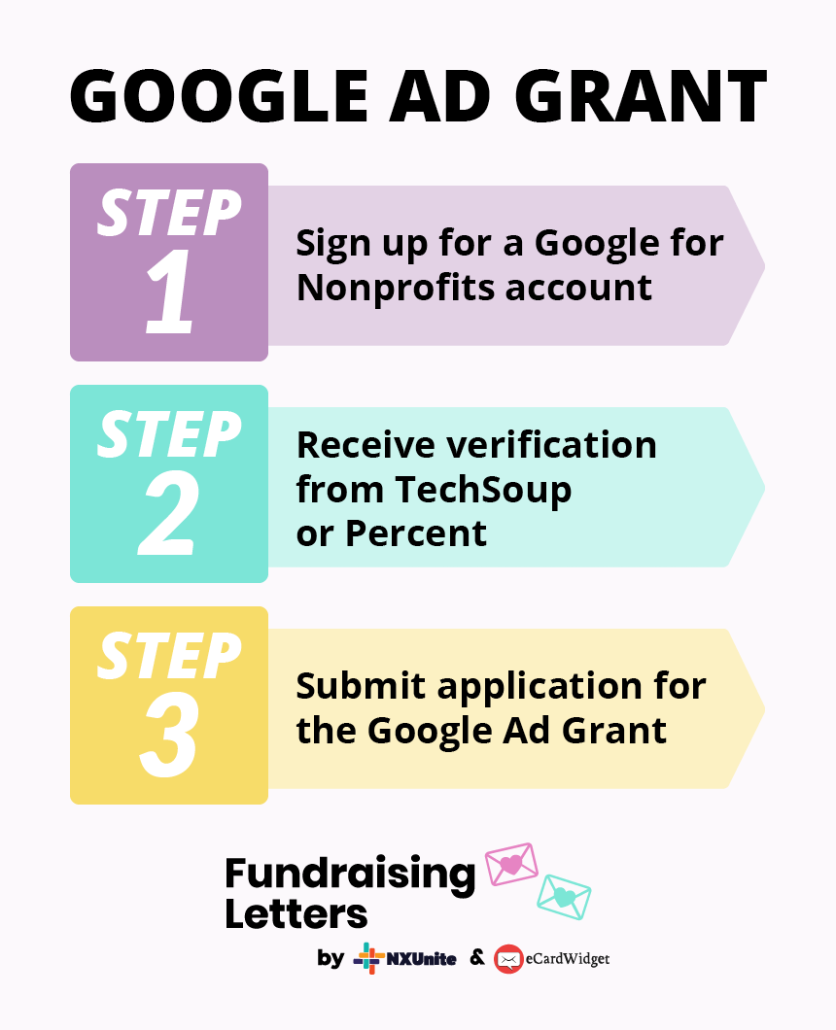
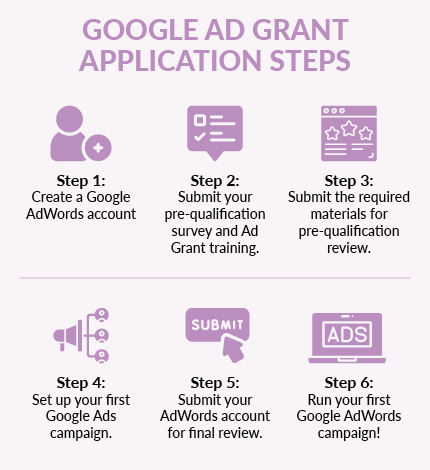
To further promote donor recognition, focus your resources on boosting visibility. Google’s Ad Grant program, for example, can draw more attention to your website’s landing pages. If you’re approved for the grant, you’ll receive $10,000 in ad credits, which you can use to help your webpages rank higher on the search engine results page (SERP). This leads more people to click through to your website, where they’ll learn more about your donors’ significant contributions!

What Are Popular Donor Recognition Ideas?

Once you have the essentials down, it’s time to get creative. There are all sorts of ways to recognize your donors beyond traditional thank-you letters. First, evaluate your nonprofit’s resources and capabilities.

Large organizations conducting major undertakings like capital campaigns might have the ability to construct permanent donor recognition installations on a grand scale, while smaller-scale nonprofits might opt for creating a virtual donor wall or sending thoughtful gifts.

The scale of the gift should also be considered when acknowledging donors. Establishing giving levels will ensure that smaller tiers of donations made to a crowdfunding campaign and large endowments for a building expansion are proportionately recognized. We’ll cover both ends of the spectrum with the following popular donor recognition ideas.
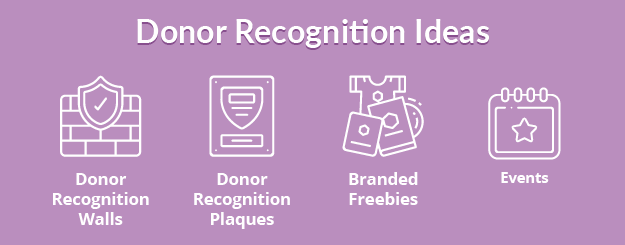
Popular donor recognition ideas include donor recognition walls, plaques, branded freebies, and appreciation events.

1. Donor recognition walls

A donor recognition wall is a meaningful way for you to permanently convey your appreciation for your donors. Because they can accommodate many names, donor walls are usually associated with large capital campaigns. There is plenty of room for customization, so get inspired with Eleven Fifty Seven’s donor wall ideas.

For example, the Berry Family Foundation features prominent donors’ names on a wall titled “Thank You For Building Independence” beside the facility’s welcome desk.

The Berry Family Foundation’s donor recognition wall is a stellar example of thanking donors and retaining their support over time.

At the same time, nonprofits with limited budgets can benefit from the ease and added flexibility of virtual donor walls. With this appealing option, you can acknowledge donors as traditional recognition walls allow, while also having the ability to make updates at any time and drive online traffic to your nonprofit’s site.

2. Donor recognition plaques

If a large-scale donor wall isn’t quite feasible but you still want to recognize your major donors in a meaningful way, custom plaques are another excellent choice. Donor plaques are often featured outside the doors of a new building expansion or on landscape features like benches, but get creative to find the perfect fit for your unique donors and community.

3. Branded merchandise

For smaller-tier donations your nonprofit receives, gifts of branded merchandise are a more reasonable option than plaques. Consider sending out pens, T-shirts, mugs, and other customized items featuring your organization’s name and logo as a token of your appreciation. This method has the added benefit of doing a little marketing work for you!

4. Events

Shine the spotlight on your donors by inviting them to an exclusive supporters-only occasion or finding ways to recognize them at public events. Making them a part of your community and your cause helps to ensure they’ll keep supporting your mission well into the future. Casual virtual gatherings and happy hours are particularly cost-effective yet impactful ways to show your appreciation.

Out of these options, select which best fits your organization and the giving scale. Remember to always be prompt, personal, and powerful in all of your communications with your generous supporters.

Nurturing your relationships with current donors through effective and genuine recognition is a smart long-term strategy for securing enduring support for your nonprofit. And, you can show your gratitude for them every day, with your own donor recognition methods. Even when you aren’t throwing an appreciation event, actively steward your supporters and send out regular surveys seeking their feedback.

By keeping tabs on which aspects of your work and mission resonate best with donors, you’ll be able to optimize their experience with your organization. Best of luck!

Additional Resources

As a performing arts program administrator, you’re likely familiar with the opportunities and challenges that come with fundraising for your department. Fundraising supplements the revenue you generate from selling tickets to student shows and major gifts to your college. Besides helping make your program the best it can be, fundraising builds mutually beneficial relationships between the performing arts department and the rest of your university community.

Between planning performances, scheduling and holding auditions, and other administrative duties, fundraising can be tough to fit into your department’s schedule. However, by choosing the right fundraising ideas and encouraging widespread involvement, you can bring in revenue that makes a positive impact on your program.

To help you get started, this guide will walk through five of the best fundraising ideas for performing arts programs, which include:

  1. Open Mic Nights
  2. Direct Mail Fundraising
  3. Crowdfunding
  4. Virtual Auctions
  5. Matching Gifts

Before you try any of these ideas, check with your college to make sure you’re following their fundraising guidelines. Also, to maximize participation, consider surveying program staff, faculty, and students to see which fundraisers appeal most to them and use their feedback to narrow down your list of ideas. Let’s dive in!

1. Open Mic Nights

Hosting an open mic night can spread the word about your program at your college and help the community see why performing arts are important. You’ll mainly bring in funds by selling tickets, but you can also host a raffle during the event or set up a donation jar for additional contributions.

To make your open mic night as successful as possible, try these tips:

  • Have some performers sign up in advance. Although it’s a good idea to have a few slots available for day-of signups—it is an open mic night, after all—your event will run more smoothly if you fill most of your list earlier. This way, you can transition smoothly between performances and have the right equipment on hand (aux cords, extra microphones, etc.) for each act.
  • Find a casual, low-cost venue. Coffee shops and restaurants located near college campuses will often rent out space to groups from the college for a reduced cost, and you can increase your fundraising revenue by arranging to split the profits from that night’s food and beverage sales with the business. Or, if your campus has an outdoor amphitheater, see if you can reserve it for free one evening (weather permitting).
  • Market your fundraiser. Hang up flyers around campus, send out emails to your department, post about the event on your program’s social media accounts, and encourage performers to invite their friends personally.

In addition to bringing in revenue for your program, open mic nights are also popular with performing arts students as they provide a safe space to perform their favorite pieces or try out new material. According to Acceptd, having a low-pressure performance like an open mic to look forward to helps performers reconnect with their love of the arts while improving their skills.

2. Direct Mail Fundraising

Although online fundraising methods have become more popular in recent years, direct mail still plays a role in driving donations for a variety of organizations, including university programs. It’s particularly useful for reaching out to parents of current and former students, as well as major benefactors of your university, about specific initiatives that need their support.

To make your campaign succeed, Pursuant’s guide to direct mail fundraising recommends these strategies:

  • Leverage storytelling. Include real stories about your program’s activities to help recipients understand why you’re asking them to donate.
  • Incorporate visuals. Put your department’s logo at the top of each direct mail message so donors view it as credible, and add relevant photos to supplement the stories you tell.
  • Connect your online and offline outreach. Use direct mail to introduce the reason you’re asking for donations, then add a QR code or easy-to-type link to your program’s website so they can learn more.

Also, make sure to personalize each direct mail message. Potential donors will be much more receptive to a letter that begins with their name and thanks them for their past contributions.

3. Crowdfunding

Your program’s social media accounts can serve multiple purposes: informing the community about upcoming events, showcasing student successes, helping your department recruit for free, and fundraising through crowdfunding campaigns. Crowdfunding allows your organization to collect many small donations that quickly add up to make a significant difference.

To make your crowdfunding campaign effective, set a clear deadline and fundraising goal, which creates a sense of urgency for supporters to give before time runs out. Create your campaign through an easy-to-use crowdfunding platform and encourage donors to share the fundraiser with their followers to help you bring in even more donations.

4. Virtual Auctions

As far as fundraising events go, auctions tend to have high attendance because people enjoy receiving items in return for supporting a cause and participating in a friendly competition. To attract more alumni and students’ family members who may live far away from campus, your program might consider hosting your auction virtually.

Much of your auction’s success depends on securing items that attendees will want to bid on. Taking your program’s audience into consideration, here are some ideas for items to sell at your auction:

  • Tickets to your department’s upcoming shows.
  • Memorabilia from past performances, like props you don’t intend to reuse or posters signed by cast members.
  • Donated merchandise or gift certificates from local businesses.

To increase attendance rates, promote your auction through email and social media, including links to your registration form. Also, consider releasing a sneak peek of your auction catalog in advance to get attendees excited about bidding.

5. Matching Gifts

Corporate matching gifts allow you to essentially double many of the donations your program receives. When a community member who works for a company that matches gifts to colleges donates and submits a match request, their employer will also give, usually matching the original donation at a 1:1 ratio.

Although this fundraising idea is lucrative, you’ll especially need to check with your college to ensure they have the right tools available to process matching gifts designated for performing arts. It’s also important to promote matching gifts in your community so donors know to check their eligibility when they give.

The ideas in this guide are just five of the many possible fundraisers your performing arts program could consider. After you try an idea, note what went well and where you could adjust your strategy to improve your results next time. Happy fundraising!


Author: Jerry Tsai

Jerry Tsai is the President of Acceptd, a Togetherwork company that is the premier recruitment, application, and audition platform for the arts. He is passionate about serving the arts community and loves that art is a way to wind down and enjoy all that life has to offer.

As an animal shelter owner, advocate, or volunteer, it’s no secret that you’re passionate about ensuring the animals in your care are safe, healthy, and suitable for adoption. But to make a significant impact on the lives of your furry friends, you need access to ample resources. Organizing a fundraiser and making donation requests can help you raise awareness for your cause, drive meaningful support, and protect more pets.

In this guide, we’ll explore four fundraising ideas so that animal shelters like yours can continue making a difference well into the future.

1. Leverage crowdfunding.

Crowdfunding relies on a wide variety of donors making small to midsize gifts online. Unlike traditional fundraising, which requires you to physically sift through potential donors before starting the outreach process, crowdfunding connects you to thousands of potential donors with no physical meetings required. All you have to do is present your cause in a compelling way that inspires people to give and share the fundraiser with their peers.

For the most effective crowdfunding strategy, follow these steps:

  1. Choose the right crowdfunding platform. There are countless crowdfunding platforms that you can use to host your fundraiser, the most popular being GoFundMe. Conduct research into platform fees and restrictions so that you know you’re making the right decision for your organization.
  2. Create a crowdfunding page. Create a donation page through your chosen platform with information about your cause and the purpose of your fundraiser. Include photos of the animals and testimonials to tug at people’s heartstrings and get them invested in your cause.
  3. Get specific about your need. Narrow the focus of your fundraiser, explaining how much money you need and what it will go towards. People are more likely to contribute when they know their gift will go toward something meaningful and specific. For example, rather than crowdfunding for your shelter as a whole, you might raise money for an animal’s vet bills or for renovating your kennels.
  4. Spread the word. Include a link to your crowdfunding page in your marketing assets and encourage supporters to share the page with their personal networks, using a strong call-to-action like “Your one-time gift of $20 can help dogs like Daisy live a happy and healthy life.”

This process is an effective, low-pressure way for people to contribute to your shelter on their own terms. When done correctly, the combination of gifts will add up quickly and help you reach your fundraising goals.

2. Launch a social media campaign.

Social media is an easy and effective way to connect with donors, adoptees, and volunteers. It allows potential supporters to learn more about your organization, engage with success stories, and donate — all within a few seconds.

To create a strong social media presence, it’s important to cater your content to each platform, including:

  • Twitter: Because of its strict character limit, Twitter is ideal for sharing quick updates about your shelter, fundraising campaigns, and the adoption process. You can also start a hashtag campaign using a catchy tagline like #AdoptDon’tShop. This will help extend your reach and drive traffic to your account.
  • Instagram: With features like reels and stories, Instagram is all about visual media. Allow the animals in your care to take center stage through photos and videos. A simple before-and-after picture of a freshly groomed dog can garner meaningful support.
  • Facebook: With almost three billion users of all ages, Facebook represents an opportunity to gain widespread attention. Share long-form success stories alongside photos of adoptable pets and a link to your fundraising page.
  • TikTok: If you want to target the younger generation, look no further than TikTok. In addition to posting potentially viral video content, you can use a feature called “Donation Stickers” to encourage users to make donations directly in the app.

Consider using Facebook, Instagram, and TikTok to live stream a day in the life of a shelter volunteer or staff member. This gives supporters a behind-the-scenes look at how your organization operates and how adoptable pets behave. Set up a donation form for the live stream or use mobile fundraising to ask supporters to give while they watch.

3. Host a fundraising event.

Fundraising events allow you to cultivate support for your shelter in an engaging and memorable format. Once you’ve determined that hosting an event is the best approach to raising money for your organization, narrow down the focus and type of your intended event.

Here are some popular animal shelter fundraising events to get you started:

  • Sponsor-a-pet fundraiser: For a small, monthly donation, people can sponsor an animal that has been in the shelter longer than others or has medical issues that require additional funding. Send your pet sponsors regular updates on how the animal is doing, and what their personality is like, and encourage in-person visits. That way, they can connect emotionally with the animal and feel more inclined to adopt or increase their level of giving.
  • Virtual gala: Virtual galas are inexpensive and allow you to reach larger audiences who may not be in your immediate area. Share the link to a live stream and include a meet and greet of adoptable pets, live entertainment, or a virtual silent auction for those tuning in.
  • Pet-friendly social gathering: Host an event at a local park and encourage pet owners to socialize with their animals. Charge for drinks and food to raise funds for your cause or set up an information booth where supporters can learn about your cause and meet a few animals up for adoption.

Gingr’s guide to payment processing suggests that, at each event, you include a virtual payment option, whether that be donation kiosks, text-to-give, or mobile donation forms. This encourages attendees to give beyond their ticket or registration price.

Even if an attendee chooses not to contribute, you should follow up with a thank-you letter, email, or phone call expressing your appreciation for their participation and commitment to your cause. Such outreach can help cultivate a meaningful relationship that lasts long after the event ends.

4. Participate in donation matching.

With donation matching, you can potentially double the donations that your shelter receives. Here’s how it works: An employee who works for a company with a matching gift program donates to your shelter. The employer then matches that gift, generally at a 1-to-1 ratio.

According to matching gift statistics from 360MatchPro, an estimated $3 billion is donated through matching gift programs annually. This number could be even higher if your animal shelter decides to actively pursue this fundraising channel. Tap into the power of matching gifts by sending prospective supporters a matching gift letter that includes information about how to research if their employer has a matching gift program.

Keep in mind that these fundraising ideas are a jumping-off point for your animal shelter. Adapt them as needed to fit your needs at a given time. From launching a crowdfunding campaign to maintaining a strong social media presence, an effective fundraising strategy will help your organization gain the funding necessary to provide exceptional care to animals in need.

Churches require money to keep offering services to their communities. Tithes and offerings help support the cost of operation, but intentional church fundraising initiatives are key to staying afloat and providing influential service in the long run.  Regardless of denomination, fundraising is a necessity.

Along with hosting traditional fundraising events, many churches and community organizations send out fundraising letters to their potential supporters to ask for donations directly. Mail appeals can reach a broad audience of congregants and are typically successful in gaining support from communities. When done well, fundraising letters are a cost-efficient way to share your story and frame your donation request.

We’ve developed countless templates and strategies for writing the best fundraising letters, and we’re here to help churches like yours write effective letters to garner the support you need. 

Church donation appeals vary significantly from nonprofits’ and other organizations’ letters. We’ve created this guide to provide you with the best tips for writing church fundraising letters so you can communicate with and strengthen your church community. We’ll cover the following letter-writing tips:

  1. Use Personal Salutations.
  2. Include Fundraising Campaign Information.
  3. Make Church Fundraising Asks in Specific Amounts.
  4. Vary Your Fundraising Letter Format.
  5. Show Appreciation For Their Support.

Writing any church communication letter requires strategic language and personalized touches. Use these five tips to take your fundraising letter and turn it into donations that help to push your mission forward!

1. Use Personal Salutations.

To start your letter-writing plan, choose a church fundraising letter template that can apply to a large group of donors. After you plan your general body text, personalize each letter for every recipient by adding personal details wherever you can. This will make your congregants feel valued and appreciated, making them more likely to donate.

A few ways to add this important personal touch are:

  • Addressing the donor by name. The days of “Dear Donor” are long past. Each letter needs to address the recipient by their preferred name to make an impact. This may seem simple, but it goes a long way, especially in a community as close as a church.
  • Asking based on history. Include suggested donation amounts in the letter based on the donor’s previous giving history. This shows the donor that you know them, value their past contributions, and are reaching out specifically to them.
  • Pulling information from your CRM software. Use any other engagement information you have on hand to personalize letters further. This can include mentioning the last service or church event they attended, or alluding to a broader history of how long they’ve been involved with your congregation.
  • Segmenting your donor base. Put your hard-earned data to work by using your church’s database to create groups of donors. Then, tailor letters for each segment. For example, create a group of donors who regularly get involved with your church and one for those who haven’t been as active lately.

With these best practices in mind, your donors will feel like the valued members of your congregation that they are. Plus, you can mutually strengthen your relationship through this messaging tactic.

2. Include Fundraising Campaign Information.

As you’re drafting your church’s fundraising letter, make it clear what you are asking of your donors and why. Be sure church members and supporters understand what the fundraising campaign supports, how it will affect the church’s mission, and what part their individual donations will play.

Answer these questions when drafting your letter to effectively market your fundraiser:

  • Why do you need their donation?
  • Why should they donate right now?
  • How can you communicate your campaign to the best of your ability?
  • Can you include a story to explain your need?

While answering these questions in your letter, position your donor as the person doing the action. For example, you could provide a scenario such as, “your gift of X dollars will help send five children to Bible Camp this year.” This detail helps the reader understand your campaign’s purpose and gives them a sense of connection to your cause. If you’re stuck on how to word your ask, check out Double the Donation’s guide on how to ask for donations.

Once your mission is clear, some people may want to help out but be unable to contribute financially. Provide other church fundraising opportunities for them to get involved with your campaign, such as donating volunteer time or supplies.

3. Make Church Fundraising Asks in Specific Amounts.

Don’t leave it up to the supporter to decide how much to give. Instead, provide suggested donation amounts to add personalization and reflect your church’s attention to detail.

How do you choose specific amounts for your church fundraising asks? Follow these simple steps:

  1. Using data collected in your CRM, group recipients based on wealth indicators and giving history.
  2. Get an idea of each donor’s capacity to give based on demographic information like their employer, date of birth, and mailing address.
  3. If you don’t have this information in your donor database, a one-time data append service can help you fill in the gaps. Or, check if the software tools you already use have real-time data appending functionality.
  4. Based on this information, decide on suggested donation amounts for each group of donors.

Including these specific amount options in your fundraising letters will give your donors an idea of how they can help and drive them to give more. With these benefits in mind, it’s worth spending extra time to target your potential donors.

4. Vary Your Fundraising Letter Format.

For the same reasons personalization benefits your fundraising letters, varying your letter format can make a major impact on the number of donations you receive. Direct mail isn’t the only option!

Use multiple different communication channels and letter formats to make your church fundraising asks appeal to more of your members’ preferences and therefore increase donations. Consider using a mix of the following formats:

  • Traditional letters: Send direct mail appeals to give recipients a tangible reminder of your church’s need for funds. Provide multiple ways to give, such as a QR code leading to your online donation page or a pre-addressed return envelope for cash or checks.
  • Email appeals: Email is a convenient way to reach supporters and inspire them to donate right away. Use first names in the subject lines, and include plenty of links to relevant pages on your website, like your online giving form.
  • eCards: Combine the benefits of both email and direct mail with creative eCards. These messages offer a unique, memorable way to ask for donations for your church. Plus, they’re easy to create using fundraising eCard software.

If you already have information in your donor database about your members’ communication preferences, use that data to determine who to send which type of letter to. If not, don’t be afraid to send out a quick survey to find out their preferences now.

5. Show Appreciation for Their Support.

Each time a congregant gives to your campaign, whether in money, time, or supplies, make it a priority to thank them for their generosity. They’ll feel validated in their decision to give when you recognize their contribution, which can encourage them to give again in the future. Plus, sending thank-you messages strengthens your relationship with your church community as a whole.

To do this effectively, be sure to show appreciation for all types of engagement, including:

  • Monetary contributions: Whether your congregants donate to a special project or a general tithe, they’re financially supporting your church’s work. Thank them for their generosity and explain how their contributions will be used to impact the community.
  • Volunteerism: The congregants who give their time to run your vacation Bible school (VBS), nursery, small groups, and any other church program donate their valuable time. Be sure to thank them for their involvement and explain the impact their efforts have on the congregation.
  • Participation: It may seem expected that congregants would show up to church events, but it’s not always easy for them to be heavily involved! Recognize that your church members have busy lives and that their participation in church events is meaningful to you. Explain that showing up for potluck dinners, weekday classes, and any other church outing helps your congregation feel like a family.

Follow thank-you note best practices to optimize your appreciation efforts. In these thank-you letters, you can also take the opportunity to reiterate your goals and recap the progress you’ve made toward them with a well-crafted impact statement. This will keep church members informed and looking forward to future opportunities to give!

As the fundraising field diversifies and evolves, new strategies and campaigns have taken center stage. Do-it-yourself style peer-to-peer fundraising is the perfect example.

DIY fundraising, whether it takes the form of a one-time campaign or evergreen fundraising opportunities that are always available for supporters, has become a prominent strategy to get supporters to participate in fundraising for your cause.

But benefits extend beyond just short-term fundraising goals. Encouraging supporters to take an active role in your fundraising efforts can actually increase your donor retention rates. With DIY fundraising, supporters get personally connected to the mission and stay motivated to fundraise because they know what they do makes a difference.

And the best part? Because they are social fundraising campaigns, DIY fundraisers help you reach new donor segments. According to The Giving Experience study by OneCause, 54% of first-time donors to these campaigns contribute because they want to support the person who asked them.

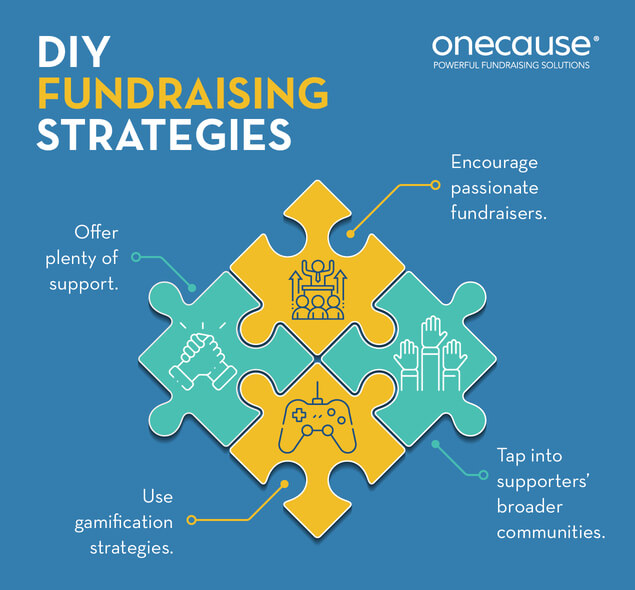
But how can you strengthen your DIY fundraising strategy and provide supporters with the best possible experience? Here are our top four strategies for effective DIY fundraising:This image shows the four DIY fundraising strategies discussed in the text.

  • Encourage passionate fundraisers.
  • Tap into supporters’ broader communities.
  • Use gamification strategies.
  • Offer plenty of support.

While DIY fundraising can take many different forms, following these best practices ensures that your participants stay motivated and engaged from start to finish. Let’s take a closer look at how DIY fundraising can amplify your fundraising strategy.

What is DIY Fundraising?

DIY fundraising, or do-it-yourself fundraising (also known as supporter-driven fundraisers), empowers supporters to fundraise for your nonprofit in their own way. You’ve likely already encountered some forms of DIY fundraising, including:

  • Birthday fundraisers
  • Memorial or tribute fundraisers
  • Personal fitness challenges
  • School-wide fundraisers
  • Individually organized runs, walks, or rides
  • Supporter-hosted events (celebrity bartending events, concerts, food & wine parties)
  • Ambassador campaigns for galas

To get the most from DIY peer-to-peer fundraising, nonprofits need to provide supporters with centralized fundraising resources and tools. From toolkits to peer-to-peer software to personal fundraising pages, you need to have the right resources to set up your supporters (and your nonprofit) for success!

Although your nonprofit won’t be fundraising directly in this type of campaign, strategic vision and guidance from your team are actually quite important for overall success. There are a ton of ways that you can support your fundraisers and help them get the most from their social networks.

Strategy 1: Encourage passionate fundraisers.

Have you ever connected with a supporter and thought they’d be a great ambassador for your cause? These passionate, committed, and impact-driven supporters are likely already in your contact list. All you need to do is sit down and think about who they are. Talk to your team and your volunteer managers, or look back at your donor data to help you identify the perfect people to lead your DIY peer-to-peer fundraising initiative.

Passionate supporters might surprise you and start fundraising on their own if they have the option. You won’t always have control (and you don’t necessarily need to) over who decides to launch a birthday fundraiser for your organization, for example.

But that’s okay! The beauty of DIY fundraisers is you can recruit your participants and set up evergreen DIY fundraising programs that allow engaged supporters to come to you on their own. When identifying potential DIY participants, look for the following traits:

  • Passion: Your fundraisers should be excited to be involved. Perhaps they have a personal connection to your cause or are deeply motivated by your mission. Excitement is contagious, so find supporters who will help spread enthusiasm about your nonprofit and the work you’re doing.
  • Knowledge: Be sure that any fundraiser, whether you specifically recruited them or not, has access to relevant information about your cause. Share an online library of brand assets and mission resources so it’s easily accessible to all your DIY fundraisers.
  • Past Support: Consider a fundraiser’s previous level of engagement with your nonprofit. Invite supporters who have a history of giving, event attendance, and/or volunteering. Past engagement is often a good indicator of DIY success.

No matter what, do everything you can to encourage your DIY fundraisers’ passion. Taking the time to identify the right people for your supporter-driven strategies ensures you have the best of the best on your DIY team and maximizes the chances of retaining them over the long run.

Strategy 2: Tap into supporters’ broader communities.

As you encourage your DIY fundraisers to spread the word, they’ll promote their giving page to friends and family. But consider other pre-existing groups they may be involved with—churches, schools, workplaces—where their connections can generate even more support for your mission.

Workplace giving is a perfect example, and it’s one of the greatest untapped resources for nonprofit organizations. According to 360MatchPro, an estimated $4-7 billion in matching gift funds goes unclaimed every year.

In addition to matching gifts, there is a variety of other workplace giving methods your donors may have access to, including:

  • Volunteer grants. Like matching gifts, volunteer grants are donations that companies make to nonprofits. Instead of matching employee donations, however, they make contributions based on the number of hours their employees volunteer. If your organization has a strong volunteer base, encourage them to check their eligibility and request volunteer grants from their employers.
  • Annual giving campaigns. Some businesses host yearly fundraising campaigns in which they raise money for a certain cause that their employees care about to encourage participation. If many of your supporters work for the same company, they can introduce your fundraising team to company representatives responsible for workplace giving to kick off a working relationship.
  • Charitable giving stipends. While less common than matching gifts, charitable giving stipends allow employees to give a predetermined amount of money to the cause of their choice. Your donors may have the opportunity to contribute funds to your organization on behalf of their employers instead of using their own money.
  • In-kind donation drives. Monetary contributions are important for ensuring your nonprofit operates smoothly, but you can also benefit from the donation of goods or services. For example, a company may host an in-kind donation drive to support an animal shelter in which their team brings in pet food, toys, and leashes to donate.

DIY fundraising is an ideal way to better incorporate workplace giving into your fundraising strategy. It helps you tap into supporters’ broader circles of contacts, reach brand new supporters, and forge valuable relationships. You can even reach out directly to a business to see if they’ll launch a campaign of their own.

By bringing DIY fundraising to the workplace, you can:

  • Connect with local businesses: Any nonprofit knows that partnerships with for-profit businesses are important. By encouraging local businesses to take action through fundraising, you can begin cultivating these relationships. Plus, if a local business has already run a fundraiser for your nonprofit, they’re more likely to continue sponsoring your work, like by donating items or services to your upcoming auction.
  • Get your fundraisers involved: If you’ve connected with a passionate supporter, ask them if they’d be interested in hosting a fundraising event at their workplace. There are all kinds of workplace-friendly fundraising ideas out there to help them get started, and it’s a great way to broaden your network.
  • Increase visibility: Whether you’re working directly with a business or with an individual fundraiser, bringing fundraising to the workplace allows you to connect with all of the employees working there. This way, you can expand your donor base by meeting potential supporters you might not have encountered otherwise.

By empowering passionate employees to get involved and bring fundraising into their workplaces, you can enhance your DIY fundraising efforts.

Strategy 3: Use gamification strategies.

One challenge of DIY fundraising is keeping everyone motivated from start to finish. The best way to keep supporters engaged is to make it fun! We recommend gamification tactics to bring both competition and enjoyment to your DIY fundraisers.

Incorporating gamification strategies takes even the most creative fundraising ideas to the next level. To add gamification to your DIY fundraiser, try:

  • Fundraising leaderboards: Motivate your fundraisers by showing off top performers. A little healthy competition can go a long way to keep supporters engaged throughout the fundraiser and can help everyone raise more funds.
  • Implement rewards: Offer rewards to incentivize your supporters to hit or even smash fundraising goals. These rewards could include anything from branded merchandise to a facility tour to a prize provided by a local business.
  • Create milestone achievements: Set milestones or goals for your peer-to-peer fundraisers to work toward. Giving people concrete goals to achieve is a great motivator and can help make their impact feel more tangible.
  • Involve teams: To get more people involved and to keep your fundraisers motivated, encourage them to get their friends and family members involved by forming teams. This way, team members can lean on each other for support and work to motivate each other.

If you find that gamification works very well with your donor base, consider investing in dedicated P2P fundraising software to streamline the process and seamlessly integrate gamification into your participant experience.

Strategy 4: Offer plenty of support.

Your fundraisers will feel motivated to continue fundraising if they feel like your nonprofit is there to support them along the way. Be sure to offer your DIY fundraisers a helping hand with:

  • Detailed fundraising guides: If your supporters want to run a virtual program or engage in a more complicated activity, create a step-by-step guide and other training resources. These helpful tools set them on a path to success and provide a roadmap for how to execute a successful DIY fundraiser.
  • Shoutouts on social media: Your DIY supporters deserve public recognition! Share their extraordinary efforts on your social media pages and thank them for their participation. This is also a great way to bring even more visibility to your support-driven fundraising efforts.
  • Share impact: For today’s donors, it’s essential that nonprofits share the impact of their work. Doing so boosts your fundraising efforts by showing donors that their DIY support really does make a difference. Your fundraisers want to know how they’ve impacted your cause, so tell them!

Supporting your fundraisers with guides, social posts, and impact-sharing creates a culture of gratitude and teamwork for your DIY program. It also allows you to support these efforts at scale, giving your participants a helping hand but not overburdening your team. No matter what kind of DIY program you launch, just remember to build in support structures and reach out to your supporters along the way!


Your DIY fundraisers have dedicated time, passion, and energy to raising money for your cause. Some of them have had your help and some of them haven’t, but regardless, make sure to say thank you. Expressing gratitude demonstrates that you are thankful for all their hard work.

Be sure to continue supporting your donors and giving them the tools they need to be successful. You’ll have all kinds of effective DIY fundraisers up and running in no time.


Kelly Velasquez-Hague brings over 20 years of fundraising, nonprofit management, and sales/marketing experience to her role as the Director of Content Marketing for OneCause. As a member of the OneCause sales and marketing team, Kelly manages all of the company’s content strategy and execution. She is passionate about empowering great missions and loves that her current role allows her to continue to help nonprofits reach new donors and raise more funds for their cause.

Peer-to-peer fundraising can sometimes seem like a daunting venture. With this strategy, your success or your failure rests in your supporters’ hands. You’re relying on your supporters to champion and fundraise for your cause as proxies for your organization. 

When you have invested supporters, peer-to-peer fundraising allows you to expand your reach and engage new, potential donors in their individual networks. Because these donation requests are being made by a trusted friend or colleague, these potential donors are also more likely to donate to your cause.

However, without supporters’ dedicated participation, this type of campaign is likely to fall flat. So, how can you encourage participation from both existing and potential supporters? 

Whether this is your first peer-to-peer campaign or your fiftieth, follow these four tips to set your fundraising campaign up for the best possible engagement:

  • Set SMART goals.
  • Leverage regular, multichannel communication.
  • Choose powerful peer-to-peer fundraising software.
  • Show your appreciation.

Even though your supporters are in the driver’s seat, you can’t sit back and relax as the donations roll in, especially in the planning and preparation stages. The more work you put in upfront, from recruiting a stellar fundraising team to sending letters requesting donations, the more likely your supporters (and thus your campaign) will be successful.

Set SMART goals.

So where should you start? Before you launch your peer-to-peer fundraising campaign and reach out to supporters, you’ll want to be clear about what you and your supporters will be working toward with your campaign. 

Campaign Goals

In conversations with your financial and development departments, you’ll establish your organization’s overall campaign fundraising goal. Consider: How much revenue do you intend to raise? What will be the impact of that money? Where and how will it be used? 

We recommend that the goals you set follow an established framework such as the SMART model:

  • Specific. Your goals should be narrowly-focused and identify specific, tangible resources, outcomes, and impacts for both your organization and community.
  • Measurable. Your goals should have a quantifiable definition of success and clear, accessible metrics
  • Attainable. Your goals should be achievable within reason. Sometimes organizations will have two goals: a “baseline” goal and a “reach” goal.
  • Relevant. Your goals should be meaningful to your organization, your donors, and the community you serve. 
  • Time-based. Your goals should have a defined target date as well as checkpoints along the way.

Determining the timeline and deadline for your campaign is a crucial but oft-forgotten part of the goal-setting process. If your campaign is associated with a specific event (such as a fun run or gala), you’ll likely align your deadline with that date. If you have more flexibility in your timeline, consider what time of year your supporters are most likely to be able to fundraise and donate. 

For example, if a large portion of your proxy fundraisers are teachers, you might plan the campaign for the summer—when they’ll be off from school and more available. Or since 30% of all annual giving occurs during the month of December, you might choose to host your campaign accordingly.

Individual Goals

While your organization will have an overall fundraising goal, you should also give your supporters the ability to set individual fundraising goals. Depending on the functionality of your fundraising platform, you can suggest achievable individual fundraising goals (plus their associated impact) and allow supporters to then make adjustments to their goal. 

For example, if your organization has an overall goal of $20,000, a supporter with a large network and free time might set a goal of $1,000, while a supporter with a busy schedule might set a goal for $100. Taken together, these smaller goals add up—and give individual supporters a sense of responsibility for meeting their commitment. 

Leverage regular, multichannel communication.

When you clearly articulate deadlines, impacts, and goals, you put your supporters in a strong position to set forth on their individual fundraising efforts. They’ll feel their involvement is making a positive, tangible impact and will communicate that to their network.

Thus, it’s imperative to keep your supporters apprised of how well the campaign is going, how close you are to reaching the overall goal, how they can get involved, and particular highlights and successes. But unfortunately, you can’t reach everyone on the same platform or with the same approach. Some people, for example, don’t use social media. They would miss your clever posts on Twitter or Instagram completely. 

In order to reach as many supporters as possible, plan to share these updates across a variety of channels, including:

  • Email. According to Donately, 28% of all online nonprofit revenue is generated via email outreach. People are constantly checking their emails, so this is one of the easiest ways to get your campaign in front of your supporters. Since emails can be easily forwarded and shared, write them with both your supporters and potential supporters in mind.
  • Social Media. Love it or hate it, social media is now an all but necessary fundraising tool to reach potential supporters beyond your immediate network. Focus on the platforms (such as Facebook, Instagram, TikTok, and Twitter) your followers use most. 
  • Google Ads. While for-profit corporations pay large sums of money to advertise on Google search results pages, your position as a nonprofit makes you eligible for free advertising on Google with their Ad Grants program. With up to $10,000 worth of ad placements a month at your disposal, you can connect with a broader audience and engage them to join your peer-to-peer fundraising campaign. 

Whatever channels you choose, you can use storytelling to effectively engage your audience. According to Getting Attention’s Guide to Nonprofit Storytelling, while 63% of people will remember a story, only 5% will recall a statistic. Using personal narratives, first pose a problem that your nonprofit is working to solve. Then, give followers a way (peer-to-peer fundraising!) to take an active role in shaping the story.

Choose powerful peer-to-peer fundraising software.

You can do everything in your peer-to-peer fundraising outreach right, but your fundraising software will ultimately make the difference in whether that work pays off. The best fundraising platforms are easy to use, offer robust sharing, data tracking, and integration capabilities, and are fully customizable. When choosing your software, consider its: 

  • Usability. Usability is just as important to your proxy fundraisers as it is to their donors. Participants don’t want to struggle to set up their personal campaign page—which can be an immediate deterrent to their participation—and share text and visual updates on their progress. Moreover, many of their donors will abandon the donation process at the first hint of a roadblock. Your platform should make it as easy as possible for visitors to donate without having to jump through multiple hoops.
  • Sharing capabilities. With so many people on social media, your platform’s sharing capabilities are crucial to the success of your peer-to-peer fundraising campaign. Consider how easy it will be for participants and donors to share using your peer-to-peer solution. What social platforms will it connect to? Will sharing be burdensome or ignored, or actively encouraged with noticeable buttons and prompts? 
  • Data tracking capabilities. The right peer-to-peer fundraising software will support easy and organized data tracking and analysis. You should be able to track your most successful fundraisers, popular donation amounts, and giving trends at the click of a button. Use this information throughout your campaign to adapt to new trends and the needs of your fundraising participants and their networks. Some software can even help you fill in missing data, like employer information, at the click of a button.
  • Integrations. Nothing’s worse than having to retype hundreds of email addresses from one platform to another. For the sake of efficiency, your fundraising software should be able to connect widely to other software, such as MailChimp, Double the Donation, and WordPress. Integrations can also have significant implications for donor participation. For example, when 84% of potential donors say they’re more likely to donate if a match is offered, integration with corporate donation matching software can dramatically increase both your number of donors and donation amount. 
  • Customization. While customization is certainly important to your peer-to-peer fundraising participants, it’s also important to how your organization presents itself to the public. For a consistent brand experience, you should be able to set your organization’s colors and logos across all pages.

Don’t let your fundraising software hold back your peer-to-peer fundraising campaign. As you choose your software, consider these factors alongside the needs and budget of your organization. 

Show your appreciation.

Don’t save your appreciation till after your peer-to-peer fundraiser is over. Instead, make it a practice to show your appreciation to your supporters at regular intervals. 

Unsure about the best way to say thank you? Ask your supporters how they’d like to be appreciated! Popular thank-you ideas include:

  • Public recognition. Throughout your campaign, highlight your peer-to-peer fundraising participants with shoutouts and profiles in your email newsletter and on your social media accounts. Like any positive reinforcement, sharing positive recognition will deepen your participants’ connection with your organization, incentivize participation, and drive traffic to their individual fundraising pages.
  • Exclusive events. In addition to hosting a celebratory event at the end of your campaign, consider also hosting informal events during the campaign. Use these events to show your thanks and give peer-to-peer fundraising participants opportunities to connect with one another. If your participants are spread across the country—or the world!—use virtual event software to strategically host a hybrid or virtual event.
  • Personalized thank-yous. Once the campaign is over, don’t forget to send participants thank-you letters or emails. You can use your CRM to automatically personalize these with their names, their titles and pronouns, and the amount they fundraised in the campaign.

In addition to thanking your proxy fundraisers, you can also take steps to thank those who contributed to each individual’s campaign page. While they may not yet be invested in your cause, you can leverage your shared connection to convert them into loyal supporters.


As you plan your peer-to-peer fundraising campaign, don’t forget to ask for help. Especially with this type of fundraising, your supporters will be your best resource. So ask for their input! Reach out to trusted donors, volunteers, staff, and board members. If you’ve run a peer-to-peer fundraising campaign before, you can ask past participants for feedback on those campaigns—where they were successful and where they could be improved. 

Not only will you gain valuable insights, but your supporters will also feel that their voices are being heard. With this in mind, go for it! We’re excited to see your campaign in action.

While acquiring new supporters is important, there are many often overlooked benefits to forging long-term relationships with your existing donors.

Retaining supporters requires a mix of appreciation strategies, strong communication practices, and a continued dedication to fulfilling your mission. While this can take quite a bit of effort, in exchange, your nonprofit will begin forming relationships that can potentially span decades and can enjoy all of the benefits those long-term connections bring.

Let’s explore four benefits your nonprofits will experience.

1. Reliable support.

According to CharityEngine’s donation guide, “the health of a nonprofit can often be measured by sustainers.” This is because, with long-term donors, your nonprofit can look forward to reliable support on a routine basis. With recurring donations, your nonprofit can allocate your spending for future growth and have a cushion to fall back on if another fundraiser falls short.

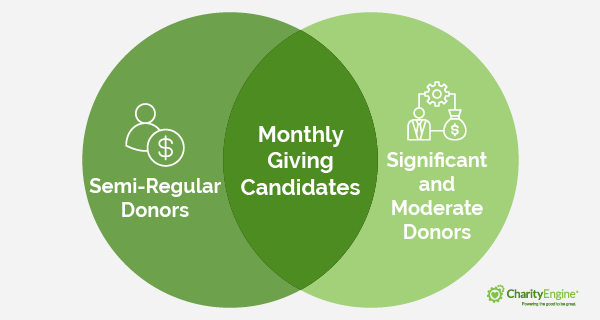
The following giving traits may help your nonprofit identify potential recurring donors:

A chart that shows the giving traits that indicate a donor may be interested in recurring giving, which is one of the benefits of forming long-term relationships with supporters.

  • Semi-Regular Donors. Those who give regularly but infrequently are ripe for a campaign encouraging them to become monthly donors, even if the donation amount decreases. You’d rather have $10 a month ($120 a year) than $25 given quarterly.
  • Significant and Moderate Donors. These donors are often your major gift donors, without whom you might struggle to hit fundraising goals. When major gift donors engage in recurring gifts, it significantly strengthens your nonprofit.

Supporters can provide reliable help in other ways, such as campaign involvement and event attendance. Your long-term, dedicated supporters are often regular event attendees, and their presence at your events can help build a sense of community and make event management easier for your planning team. After all, events are at their most fun and successful when there are enough guests to participate in your activities, socialize with each other, and donate if it’s a fundraiser.

2. Increased value.

Few donors give major gifts to unfamiliar nonprofits. Long-term relationships can build the backbone of many nonprofits’ fundraising revenues by fostering recurring gifts.

Mid-level donors also tend to give more the longer their relationship with a nonprofit lasts. The longer a donor has been with your organization, the deeper their investment in your cause becomes and the more receptive they are to requests for increased support.

Here are a few ways you can earn more from your moderate donors:

  • Increased gift amounts. Mid-level donors often increase their support throughout their relationship with a nonprofit. For example, a donor who gives $10 a month will likely be receptive to a request asking for $15 a month after they’ve been with your nonprofit for a significant amount of time.
  • Participation in multiple fundraisers. Supporters familiar with your nonprofit and your usual fundraising methods may become interested in supporting you in other ways, like volunteering.
  • Planned giving opportunities. Planned giving can help nonprofits gain significant funding, and long-term relationships are vital to its success. NPOInfo’s charitable giving statistics found that nonprofits often need decades-long relationships with donors to enroll in a planned giving program.

To track your supporters’ contributions over the years, note their donations and participation in their donor profiles in your CRM. This way, you’ll know exactly where each donor is in their donor journey and be able to ask for a donation increase at the right moment.

3. More networking opportunities.

Donors will feel more comfortable with your nonprofit after seeing an active community, which communicates the organization’s health and success. Your long-term supporters can also take active steps to grow your nonprofit network, such as:

  • Word-of-mouth marketing. Long-term supporters are more likely to participate in word-of-mouth marketing, improving your nonprofit’s reputation while attracting new interest from their friends and family.
  • Peer-to-peer campaigns. Peer-to-peer campaigns leverage your supporters’ relationships as they fundraise on behalf of your nonprofit. Then, rather than giving to an unfamiliar organization, new donors will give to a trusted friend or family member. Plus, if you invest in the right nonprofit fundraising software, you’ll have access to peer-to-peer fundraising and advocacy features that make it easy for supporters to spread the word.
  • Prospective donors introductions. Major donors with whom you have a long-term connection can make introductions between you and their personal friends. Plus, if you’ve discovered a potential major donor through wealth screening, you can see if you have any donors with pre-existing relationships who would be willing to set up an introduction for you.

Remember that donors are most likely to help your nonprofit network when they have a strong relationship with your organization. Create a positive donor experience for all of your supporters to ensure that when they discuss your nonprofit with friends and family, they’ll have many positives to share.

4. Greater return on investment.

Encouraging your current donors to continue giving is ultimately more cost-effective than bringing in new donors. While you should continue your donor outreach efforts, don’t forget to steward your current donors.

Here are a few basic strategies for identifying and stewarding long-term supporters:

  • Identify recurring giving candidates. Once you have basic information about a supporter, such as their contact and giving information, you can determine how likely they are to become a long-term supporter. If you aren’t completely sure about your donor’s eligibility for perks like corporate sponsorships or matching gifts, data appending services can help you fill in the gaps.
  • Show appreciation. Thanking a donor immediately demonstrates your attention and appreciation. Donors who feel noticed are more likely to strengthen their support of your nonprofit and feel more engaged, which benefits your nonprofit in many ways.
  • Collect supporter feedback. Understanding which stewardship strategies are working and which need to be tweaked can directly impact your fundraising. Plus, the sheer act of asking can help many supporters feel acknowledged and appreciated.

Compared to the marketing required to attract a new donor, these steps require few resources besides your time and a robust fundraising platform. While you should still work to attract new donors, these additional steps can help retain your current base and ensure you receive a return on your marketing investment.

Your supporters ensure your nonprofit can continue fulfilling its mission, and your long-term supporters have made the greatest investment in your cause. By maintaining these important connections, your nonprofit can look forward to reliable support, increased revenue, and opportunities to grow your organization. Use your donor management tools to look for ways to build and maintain these relationships with your long-term supporters.


Author: Leigh Kessler

Leigh Kessler is VP of Marketing and Communications at donor management software platform CharityEngine and a frequent speaker on branding, fundraising, data and technology.  He is a former nationally touring headline comedian and has appeared on numerous TV shows including VH1’s “Best Week Ever”, CNN’s “Showbiz Tonight”, Discovery Channel & Sirius Radio.​ He has overseen and informed research and branding strategies for some of the most well known brands in America.

Is your nonprofit making the most of its fundraising opportunities? With employer appends, you can use donor data to improve fundraising efforts.

Employer appends use donor data to give nonprofits information about their donors’ employers. This includes information about matching gift programs, a corporate social responsibility program that allows your donors to double gifts at no extra cost. The employer append process can be a challenge if you’re taking it on alone, but there are plenty of great services to consider.

Whether you are a beginner or an expert in data-driven fundraising, this guide is a great resource for your nonprofit. In this piece we’ll discuss:

Employer appends could be the thing your nonprofit needs to elevate its fundraising efforts and boost revenue. Let’s get started with an overview of employer appends.

Click to get a quote so you can upgrade your fundraising strategy with employer appends.

What are employer appends?

Employer appends add data about donors to your organization’s existing database. More specifically, these appends include information about donors’ employers.

The insights found through employer appends are beneficial to nonprofits in many ways. The main advantage for nonprofits is identifying possible corporate social responsibility (CSR) opportunities.

Employer appends are easy to understand, but it may not be clear why they are important. The next sections focus on why employer appends are valuable and what you need to get started.

Why are employer appends valuable?

Capitalizing on CSR opportunities is one of the biggest reasons to use employer appends. But, employer appends offer other valuable insights. Pieces of information like a donor’s job title or their general industry can provide valuable information as well.

Here’s how the main pieces of information provided by an employer append can boost fundraising for your nonprofit:

  • Employer name: Learning a donor’s employer’s name unlocks a wealth of information about their CSR programs. Once you have access to this information, your organization can research how the employer makes good on its CSR promise. For example, if you discover that many of your donors work at the same employer, consider asking that employer to host a sponsored event with your nonprofit.
  • Job title: A donor’s job title gives away a lot of information about them. First, their position indicates how much leverage they have at work— would they be the appropriate avenue for a possible partnership? Second, their role can roughly demonstrate the donor’s financial giving capacity.
  • Matching gift information: This information tells you whether a donor’s employer offers a matching gift program. These programs fall under the umbrella of CSR and mean that employers will match their employees’ gifts to nonprofits. If you and your donors are aware of these programs, your organization can double its revenue at no extra cost to you or the donor.

Learn these key insights by simply running an employer append. Then, your nonprofit can begin to capitalize on CSR opportunities and learn more about its supporters.

What is needed for an employer append?

Employer appends supplement the donor data you already have. But, there are a few pieces of data you need before getting started. The most important donor information is donor email and mailing addresses. If you don’t have this information, check out NPOInfo’s email and address append services.

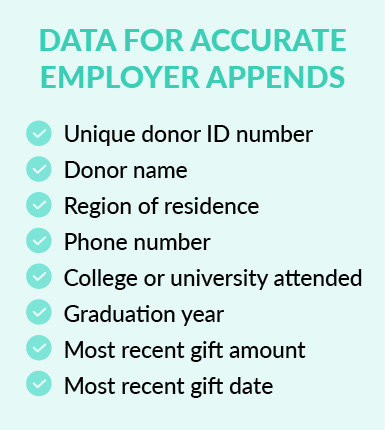
These are the 8 pieces of data that make employer appends highly accurate.

While these basic pieces of data are the most important, many data appending services ask for more data points. Typically, the more data you can provide, the more accurate the employer append will be. This includes information such as:

  • Unique donor ID number
  • Donor name
  • Region of residence
  • Phone number
  • College or university attended
  • Graduation year
  • Most recent gift amount
  • Most recent gift date

Don’t worry if your nonprofit doesn’t have every data point on this list as they aren’t all necessary. However, you can keep these data points in mind as you gather more donor data going forward, to boost the accuracy of any future employer appends.

Keeping data clean and organized can also expedite the employer append process. Data hygiene refers to taking steps to regularly clean data, making it more efficient to analyze. Good data hygiene includes practices like removing outdated or irrelevant data, maintaining a standard means of data entry, and keeping data organized.

Employer Appends for Nonprofits: Using Donor Data in Fundraising

Donor data shouldn’t go untouched on your organization’s computers, especially when it can be so useful. There are plenty of practical ways to use donor data in your fundraising strategy. Investing in donor data analysis will be reflected in increased fundraising opportunities and revenue.

Fundraising Data Analytics

This explains what fundraising data analytics are.
Fundraising data analytics uses donor data to recognize patterns and trends. These patterns inform nonprofits about how to shape or adjust their fundraising strategies. Good donor data is the foundation that fundraising data analytics is built on, so data upkeep should be a priority.

Within fundraising data analytics, there are three distinct types. Here is a quick breakdown of the three types of fundraising data analytics:

  • Descriptive fundraising analytics: Donor data is used to classify donors. These classifications are usually made based on demographic information like age. Other factors like average gift size can also be used to group donors by their willingness to give.
  • Predictive fundraising analytics: Predictive analytics are used to predict donors’ giving behaviors. These predictions are made based on past behaviors. Often, they use metrics like growth in donation size.
  • Prescriptive fundraising analytics: Here, patterns, trends, and donor classifications are combined to create a strategy. In other words, this stage involves setting up a new and improved fundraising strategy based on insights from prior stages.

While employer appends are a small piece of fundraising data analytics, donor data is crucial to both. Build a strong foundation for analytics and revenue growth by gathering strong, organized data.

Capitalize on Fundraising Opportunities

Donor data can prevent losses on potential revenue opportunities. With employer appends, your nonprofit can identify these opportunities in time to use them.

Employer appends are great at catching matching gift opportunities. There is a lack of awareness about these programs amongst donors—with 78% of donors unsure if their company offers a matching gift program—making it difficult to bring in matching gift donations. The problem is even harder to address if nonprofits are unsure which of their donors have access to these programs.

To better understand just how valuable matching gifts are, check out Double the Donation’s matching gift statistics:

  • Companies donate about $2-$3 billion in matching gift funds each year.
  • $4-$7 billion in potential matching gift funds go unclaimed each year.
  • Out of 250 multi-billion-dollar companies surveyed by Forbes, 92% offer some sort of matching gift program.
  • 1 in 3 donors indicate they’d give a larger gift if they knew it was being matched by their employer.
  • 84% of donors are more likely to donate if they know their gift will be matched.
  • When you mention matching gifts in fundraising appeals, you can expect a 71% increase in response rate and a 51% increase in average donation amount.

Fortunately, employer appends allow you to tap into this incredible fundraising opportunity by simplifying the matching gift eligibility process. After identifying which donors’ workplaces offer matching gift programs, nonprofits can spread awareness of the programs. One way to do this is to send donors matching gift letters that urge them to take advantage of the programs.

In addition to matching gift programs, corporate social responsibility programs support nonprofits in other ways. Many companies actively seek out nonprofits to support with grants. Taking advantage of additional CSR programs is a great way to garner support from sources beyond individual donors.

Another common CSR program is a volunteer grant program. While matching gift programs match employee donations to nonprofits, volunteer grant programs incentivize employee volunteerism by donating to the nonprofits they volunteer with based on the number of volunteer hours they log. Employer appends can help you to identify which of your volunteers’ employers offer volunteer grant opportunities. Then, you can notify these volunteers to follow up with their companies by sending in a volunteer grant request.

Tailor Fundraising Campaigns

Certain pieces of donor data help nonprofits tailor their campaigns to their audience. Not only does this indicate a better understanding of your organization’s supporters, but narrowly targeting your audience can also be more effective. Knowing exactly who makes up your base of donors and what they respond to means that your fundraising efforts will be more likely to reach and impact them.

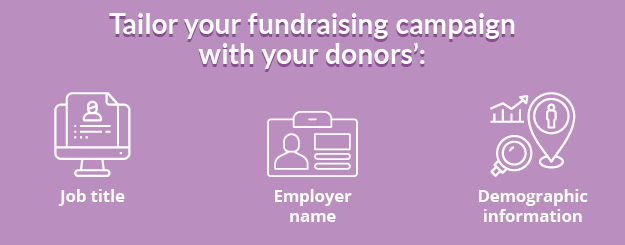
These are the 3 pieces of information nonprofits use to tailor fundraising campaigns.

Here are a few pieces of information and their implications for tailoring your nonprofit’s fundraising campaigns:

  • Job title: A donor’s job title demonstrates how financially capable they are of giving and how much decision-making power they hold at work. It is effective to target donors in high positions of authority. Not only are these donors likely more capable of giving, but they may also be able to implement more CSR initiatives at work.
  • Employer name: Learning donors’ employers’ names provides insights into their connections to CSR opportunities. Tailor fundraising efforts towards people with access to CSR opportunities like matching gift programs.
  • Demographic information: Information like age delineates important insights for targeting your nonprofit’s fundraising campaigns. For example, if your donors’ primary demographic is older people, online campaigns may not be successful. In this instance, it may be better to use mailers instead.

Donor data can be an extremely versatile tool as you work to improve your fundraising strategy. Don’t be afraid to get as much use as you can out of each data point— there is no harm in deriving multiple insights from one piece of data.

Grow Revenue Over Time

After incorporating donor data analysis into your nonprofit’s fundraising strategy, your organization should see growth in revenue.

Making the most of untapped fundraising opportunities like matching gift programs is one source of growth after a data append. These programs increase revenue by supplying your nonprofit with free money via your donors’ employers. After increasing awareness of matching gift programs, the number of donors taking advantage of these programs should increase as well.

Further, identifying your core audience and catering to their preferences will increase the amount of donations you receive. Reach these audiences in ways that will inspire them to engage with your organization.

Data Append Services: Our Top Picks

Taking on data appends by yourself can be overwhelming. Put your trust in a data append service — these teams of professionals can take the weight off your shoulders. Here are a few of our top picks for data append services.

Double the Donation

Double the Donation offers workplace giving-focused employer append services designed to help nonprofits uncover where their donors and volunteers work—an essential step in maximizing workplace giving opportunities. These services enhance your existing data by identifying employer information through advanced data matching, allowing you to surface workplace giving-eligible supporters who might otherwise go unnoticed.

Here’s what sets Double the Donation’s employer append solution apart:

  • High Match Accuracy: Using a combination of proprietary data sources and intelligent algorithms, Double the Donation delivers highly accurate employer data that helps you confidently target the right donors.
  • Seamless Data Syncing: The employer append service integrates directly with Double the Donation’s workplace giving automation platform, enabling automated follow-ups and real-time workplace giving insights based on newly appended employer data.
  • Scalable Results: Whether you’re working with hundreds, thousands, or millions of records, the service is designed to scale—helping organizations of all sizes uncover more match-eligible supporters efficiently.
  • Ongoing Value: Appended employer data can be used not only to fill in the gaps in your existing donor data but also to identify workplace giving opportunities, corporate sponsorship prospects, and more.

By enriching your donor database with employer information, Double the Donation helps you unlock hidden revenue streams across matching gifts, volunteer grants, and broader corporate philanthropy—making it a valuable asset for any nonprofit looking to grow through workplace giving.

NPOInfo

If you are a nonprofit in need of a quality data append service, look no further. NPOInfo has a team of highly skilled experts ready to take on a wide range of data append services. NPOInfo serves nonprofits, higher education institutions, healthcare organizations, and associations, giving it a leg up on services that lack nonprofit specialization.

If these services sound like something your nonprofit needs, NPOInfo might be for you. Reach out for a quote to get started.

Click to get a quote so you can upgrade your fundraising strategy with employer appends.

Wrapping Up

Employer appends are the key to discovering who your supporters really are. After learning valuable insights like donors’ employer’s name, job title, and matching gift information, it is easy to take advantage of fundraising opportunities. However, employer appends are just the tip of the iceberg when it comes to using donor data in fundraising. Donor data can quickly become an invaluable tool in your nonprofit fundraising strategy.

Interested in learning more about data and matching gifts? Check out these resources:

Click to get a quote so you can upgrade your fundraising strategy with employer appends.

Technology is more important than ever before, especially in the realm of nonprofit fundraising. With a majority of business conducted online, it is vital your nonprofit establish a strong digital presence to stay competitive in the fundraising space. However, this does not mean simply creating a website— your web presence must be well-known as a source for useful insights. That’s where Google Ad Grants come into play.

These grants are an integral tool in driving traffic to your organization’s landing pages and increasing donations. If you are unfamiliar with Google Ad Grants, no need to worry. This guide will walk you through everything there is to know by covering the following topics:

After reading this article, you will have a better understanding of how to make the most of fundraising opportunities with Google Ad Grants. Let’s get started!

Get a free consultation with our recommended Google Ad Grants managers.

What is the Google Ad Grant?

The Google Ad Grants program is a corporate giving initiative that provides eligible nonprofits with monthly grants to promote their causes via Google Ads.

Eligible nonprofit organizations can display advertisements, products, services, offerings, and other marketing content strategically at the top of the search engine results page (SERP) for relevant keywords. For example, when someone Googles “animal nonprofits near me,” an ad for your organization’s website could appear at the top of the results. This immediately draws eyes to your messaging and helps expand audience reach.

Seeing the value that Google Ads offer businesses, Google created the Google Ad Grants program to provide nonprofits with $10,000 in Google AdWords spending each month. This means that organizations can utilize the “publicity” of Google Ad placement at no financial cost of their own.

Features of the Google Ad Grant

The Google Ad Grant is especially useful for organizations that are well-established digitally with missions that are frequently searched online. 

Google Ad Grants can be incorporated into fundraising by placing your organization’s online giving page at the top of the SERPs for keywords closely related to your nonprofit. Creating a digital campaign through Google Ad Grants is one of the most effective methods for reaching your target audience without breaking the bank on a marketing budget.

A unique component of Google Ad Grants is that any eligible nonprofit can utilize the program. Unlike other grants, it is not awarded to a few lucky winners. This helps to take the pressure off of your organization, as the grant application process can be fairly competitive. If you’re interested in earning $329 per day in free AdWords spending, continue on as we dive deeper into how Google Ad Grants work.

How do Google Ad Grants work?

At first glance, Google Ad Grants can seem daunting. However, we are here to walk you through the information you need to know as you get started on your Google Grant journey – starting with Google Ad Grant eligibility.

Eligibility Requirements

The good news about Google Ad Grant eligibility is that there are only a few organizational sectors unable to apply. Those include:

  • Government entities
  • Hospital or healthcare organizations
  • Schools, academic institutions, or universities

If your nonprofit organization does not meet any of the criteria above, you’re in the clear! The remaining eligibility requirements for the Google Ad Grant program are fairly simple. In order to be considered eligible, nonprofits must:

This graphic highlights Google Ad Grant eligibility requirements.

  • Have a functional website that contains valuable content that is relevant to the nonprofit’s mission.
  • Hold current and valid charitable status, which in the United States means registering as a 501(c)(3) organization.
  • Adhere to Google Grant program policies, including registration with Google for Nonprofits and TechSoup.
  • Obtain a Secure Sockets Layer (SSL), proving that your online domain is secure.

If your organization meets these parameters, you are ready to progress in the Google Ad Grant process. As your journey continues, there are a few other factors to pay attention to. When awarding grants, Google works to ensure your organization is well-equipped to use Adwords funding efficiently. Your organization should keep the following criteria in mind:

  • Ensuring your site does not already contain revenue-generating ads.
  • Having the ability to manage Google Ads campaigns, meaning you’re able to evaluate keywords for relevancy, accuracy, and timeliness on a regular basis.
  • Selecting keywords that have a maximum cost of $1 per click.

By determining eligibility you can begin the application process to acquire your nonprofit’s very own Google Ad Grant. Let’s see how to get started.

Application Process

When it comes to the Google Ad Grant application process, there are three key steps organizations must go through to acquire a grant. In this section, we will break each of them down.

This infographic lists the three steps to apply for the Google Ad Grant discussed in the text below.

Step 1: Sign up for a Google for Nonprofits account.

Before you can apply for the Google Ad Grant, you need a verified account with Google for Nonprofits. Along with giving you access to the Ad Grant application, Google for Nonprofits provides organizations with several opportunities to increase visibility and drive conversions.

An account with Google for Nonprofits gives your organization access to:

  • YouTube Nonprofit Program: This program allows nonprofits to utilize YouTube’s many unique features and spread the word about their organization through visual storytelling. Videos are worth incorporating into your digital marketing strategy as humans process visual content 60,000 times faster than written content. With a Google for Nonprofits account, you can experience the benefits of video content and so much more.
  • Google Earth and Maps: This service shares compelling data visualizations that highlight your organization’s impact. Additionally, the use of Google Maps helps community members locate your nonprofit’s programs and resources nearest to them.
  • Google WorkspaceThis program offers complimentary access to Google’s most useful apps, such as Docs, Gmail, Calendar, Drive, and Google Meet. These programs allow you to stay organized and efficient, keeping operations running as smoothly as possible.

Your organization can access these benefits and more by registering with Google for Nonprofits. Here is how to do so:

  • Visit the Google for Nonprofits registration website.
  • Agree to Google’s non-discrimination statements.
  • Fill out the subsequent forms, including contact and organization information.
  • Submit your request and await a response.

Filling out the request for a Google for Nonprofits account is a relatively quick process, but be prepared to wait a few weeks for your request to be accepted.

Step 2: Acquire verification from TechSoup or Percent.

Your nonprofit may need to wait a week or two after applying for a Google for Nonprofits account in order to be validated. Essentially, Google uses a third-party service to verify that your organization is a registered 501(c)(3) nonprofit that is eligible for the program before giving you access to a Google for Nonprofits account.

The validation process will be handled for you by either TechSoup, an international network for nonprofits, or Percent, Google’s nonprofit validation partner. The process typically looks like this:

  • Kick off the validation process by requesting a Google for Nonprofits account.
  • Google sends your request to Percent or TechSoup, who may contact your organization for additional information or documents.
  • Within 2-14 business days, Google’s validation partner will verify that your nonprofit is legitimate and eligible.
  • You’ll receive an email confirming that your nonprofit has been verified. Now, you can activate your Google for Nonprofits account.

Once you have completed this process, the final step is submitting your application for the Google Ad Grant program. Let’s discuss how to do so.

Step 3: Apply for the Google Ads Grant.

It’s time to submit your application for the Google Ads Grant. By following the process outlined below, you’ll open the door to a whole new world of free AdWords spending:

This graphic highlights the Google Ad Grant application steps.

  1. Create a Google AdWords account. AdWords will prompt you to select your billing country and timezone. Once submitted, it will take you to your new account.
  2. Submit your pre-qualification survey and Ad Grant training. The training video will cover policy requirements, key guidelines, and best practices for managing your account along with a short quiz.
  3. Submit the required materials for pre-qualification review. Google will respond with a status on your pre-qualification submission.
  4. Once approved for pre-qualification, set up your first Google Ads campaign.
  5. Submit your AdWords account for final review using the same steps of approval as the pre-qualification process.
  6. Once approved, the nonprofit can begin running Google Ad campaigns!

The process of acquiring a Google Ad Grant is far simpler than it seems. As hassle-free, as it may be, it is important your organization stays on top of proper grant management. Otherwise, your time with Google Ad Grants may be short-lived.

Google Ad Grant Management

To maintain good standing with the Google Ad Grant program, there are a few key policies to follow. These include:

  • Account activity: Log into your account at least once a month and update the information every 90 days. This will show Google you’re still utilizing the program.
  • Ad relevance and geotargeting: It is important to run ads that have specific relevance to your audience. A great way to do this is through geotargeting, a process that ensures users are receiving ads relevant to them geographically.
  • Monthly keyword evaluation: Google requires a monthly Keyword Performance Report to ensure that you are optimizing your keywords for best results. This will put you in the best position to remain profitable. Avoid overly generic keywords and those with a quality score above 1 or 2, which Google will outline for you.
  • A minimum of 5% click-through rate (CTR): Google mandates a CTR of 5% after 90 days, in order to improve user experience and ad relevance. Accounts that fail to meet this requirement will be notified. If the account is not reached after two consecutive months, it will be suspended.
  • Account structure: When it comes to account structure, 2 is the magic number! Google AdWords campaigns must have at least 2 ads per ad group, with at least 2 ad groups per campaign. Additionally, campaigns must have at least 2 sitelink extensions.

Your organization can maintain the status of a Google Ad Grant recipient by practicing proper account upkeep. However, the pressure does not need to ride solely on your shoulders. With the help of an Ad Grant Agency, certified professionals can assist you with all of your Google Ad Grant needs

Running a Google Ad Grant Campaign: 4 Steps

Once your Google Ad Grant application is approved, you can begin researching keywords and planning your first campaign. Here’s a general overview of what goes into hosting a Google Ad Grant campaign: 

1. Establish your goal.

Before choosing keywords or writing ad copy, consider what website pages you most want to drive traffic to. You can create an ad for any page on your website as long as it has valuable content, meaning your goal is only limited by the strength of your website. 

We’ll dive more into how to launch a fundraiser with the Google Ad Grant later, but here are a few common goals that the grant can help you achieve: 

  • Earn donations
  • Attract volunteers 
  • Spread awareness of your cause
  • Promote services

To maximize traffic, create multiple keyword campaigns focused on the same goal. For example, you might create one donation-focused campaign that centers around keywords relating to giving and donating, whereas another might focus on benefits donors receive in exchange for giving, such as becoming a member, joining a community, and supporting a good cause. 

2. Choose your keywords. 

Your keywords impact which visitors see your ads, so don’t hesitate to spend a significant amount of time researching keywords or reaching out to a consultant for help. The exact keywords that will bring your campaign success depend on your audience, but there are a few general guidelines that benefit most campaigns:

  • Keyword relevance. Your keywords should relate to both your goals and your audience’s interests. Consider not just what you want supporters to do, but what they are likely to search for. For example, to promote an upcoming 5K fundraiser, you would choose keywords, like “fall marathons,” “charity 5K,” and “community fun run,” rather than focusing on the donation aspect of your event. 
  • Negative keyword. Use Google Ad Grants parameters to determine what types of queries will show your keyword. In particular, consider if there are any topics that could be mistakenly associated with your keywords and result in useless searches. Use the negative keyword feature in Google Ad Grants to ensure your ads do not show up for queries that include a negative keyword.  For example, if you’re collecting clothing donations for a homeless shelter, you might want to make “buy” and “purchase” negative keywords to filter out queries related to online shopping. 
  • Keyword competitiveness. How many other organizations are likely trying to rank for your target keyword? Google awards ad space to organizations that successfully bid on the placement. While the allocated Google Ad Grant funds can go far, you’ll likely run out of them quickly if you target the same keywords as large organizations with dedicated marketing budgets.

Picking the right keywords is an ongoing process, especially as you launch campaigns with new goals. Stay updated on what keywords are driving traffic and use a keyword research tool like Google’s Keyword Planner.

3. Create your ad. 

Once your ad starts appearing for queries, make sure that it has a headline and description people will want to click on. Here’s a breakdown of the elements of a Google Ad:

The image is a screenshot of a Google Ad with the sponsored label, headline, and description highlighted.

At the top of each ad is a bold Sponsored tag, letting searchers know that this ad was paid for. This helps maintain transparency with searchers. Plus, if you ever need guidance on how to market your pages, you can look at other sponsored content to see what similar organizations are doing with their ads. 

Next, is the headline and description. Your headline will be the title of the page you’re promoting. Choose a headline that won’t get cut off by Google’s character limit. Try keeping it to 50-60 characters to give it plenty of room on the page without getting shortened. 

For your description, you’ll also need to keep character limits in mind (around 150-160 characters), and also consider what text would encourage someone to read your content. Write copy that reflects your content and relates to the user intent behind common search queries for your keyword. 

4. Analyze your results. 

Google Ads are far from a set-it-and-forget-it type of fundraiser. While successful ads can bring in regular traffic, you’ll need to keep an eye on your analytics to tweak campaigns, launch new campaigns, adjust bidding amounts, and pause or remove low-quality campaigns. 

You can monitor your conversions by setting goals in Google Analytics and linking your Analytics account to your Ads account. This will allow you to see the queries that led supporters to click on your website and the actions they took once they got there. 

If you need help managing your campaigns, consider reaching out to a Google Ad Grants consultant who can help you research keywords and maintain compliance with Google’s ad requirements.

Working with a Google Ad Grant Agency

Professionals at Google Ad Grant agencies canmake your Google Ad Grant experience run as smoothly as possible. As experts in their field, these agencies can assist with services like:

This graphic displays Google Ad Grant agency services.

  • Google Grant Application. Experts will walk you through every step of the application process to ensure your account is reviewed and accepted.
  • Google Grant Hygiene. When it comes to Google Ads, data is everything. With the help of professionals, you will not have to deal with duplicate or outdated data weighing down your processes.
  • Google Grant Reactivation. If suspended, agencies can help get your account up and running again, allowing you to avoid the headache of going back and forth with the Google Ad Grant team.
  • Keyword Research. Professionals help make sure your website content is effectively serving audience needs while inspiring them to take action.
  • Google Grant Management. Tracking conversions and campaign performance is an ongoing process. With effective results requiring 3-5 ongoing campaigns, having professionals there to track performance and refine strategies continuously will help ensure success.
  • Optimizing website content. To best serve your audience’s needs, you’ll need to refine your landing pages to account for increased traffic and drive conversions. Ad Grant agencies can help keep your website in the best shape via constant keyword research, landing page relaunches, and more.
  • Practicing account upkeep. Agencies can make sure your organization is in constant compliance with Google Grant guidelines. This will help avoid the headache of having to go through the account reactivation process.

From start to finish, Ad Grant agencies are a valuable resource to help your organization optimize its Google Ad Grant management.

We recommend working with Getting Attention! As leading experts in their field, they’ll handle every aspect of the process for your team, working to understand your mission and achieve your marketing goals. Consider reaching out for a consultation with them to discuss your Google Ad Grant management needs.

Using the Google Ad Grant for Fundraising

Are Google Ad Grants worth it?

Not convinced yet? Here are a few key statistics that showcase the importance of a quality online presence when it comes to fundraising:

This graphic highlights important digital fundraising statistics.

  • 75% of young donors are turned off by out-of-date websites.
  • Donors are 34% more likely to give on mobile-responsive websites.
  • 51% of high-wealth donors (giving $200k+) prefer to give online.
  • When influencing donors, online resources are 20% more useful than direct mail.

To optimize fundraising potential, your organization must create a well-established online presence, and the Google Ad Grant can help immensely.

In addition to strengthening your online presence, there are several benefits of nonprofit marketing grants. These grants help to:

This graphic highlights the benefits of using a nonprofit marketing grant.

  • Carry out charitable initiatives. Online marketing and promotions, exciting fundraising events, and other initiatives can be taken to the next level with the right marketing grant.
  • Pay for your donor outreach. One of the primary components of nonprofit marketing is donor outreach efforts. From email newsletters to direct mail, these efforts can be resource-intensive. On the other hand, Google Ad Grants are free.
  • Help more people with your organization. With a well-developed marketing strategy, your organization will increase visibility and attract more supporters. The more people are aware of the issues your organization is fighting for, the more likely you’ll gain valuable support for your cause and be able to make a major impact.
  • Educate and spread awareness of your mission. A marketing grant helps to best educate and spread awareness of your mission. Effective marketing makes sure that people are aware of your nonprofit and all of its offerings.

These benefits represent the significant untapped potential your organization can unlock through nonprofit marketing grants.

How to Use Google Ad Grants to Promote Fundraising

Google Ad campaigns should drive users towards your nonprofit’s campaign pages to optimize fundraising potential. Draw inspiration for how to use Google Ad Grants to promote fundraising from the following examples:

We Care Animal Rescue

We Care Animal Rescue’s mission is to promote the general welfare of animals by fostering and caring for homeless cats and dogs. The organization works to find them their forever homes and overall educate the public on animal welfare.

We Care Animal Rescue began their Google Ad Grant journey with a few marketing goals in mind. They wanted to promote their new website, attract volunteers, and drive online donations. With the help of the Google Ad Grant, they saw a 350% increase in website activity and 125% increase in online applications. Needless to say, they experienced great impact.

Days For Girls

Days For Girls centers its work around increasing access to menstrual care and education for women. They do this through developing global partnerships, mobilizing volunteers, and innovating sustainable solutions that help shatter stigmas surrounding the topic of female care.

Their marketing goals included raising more money, getting more email subscribers, and increasing brand awareness. The Google Ad Grant enabled them to see a $212 increase in average donation value, as well as receive $5,000 in donations and 400+ conversions over a 60-day period.

DonorsChoose.org

DonorsChoose.org is the leading platform for giving to public schools. Their mission is to make helping a classroom in need easy for everyone. More largely, they’re working towards making quality education accessible nationwide, regardless of location. Teachers across America use the website to create projects requesting certain resources and donors are able to select the projects that inspire them.

The marketing goals of DonorsChoose.org were to connect more donors and teachers to the platform while keeping their budget lean. In using the Google Ad Grant, they were able to see 305,000 website visits, receive 4,900 donations, and attract 7,400 teacher registrations all in one year. With the help of Google Ad Grants, their organization underwent significant change.

Final Note on Google Ad Grants

Overall, utilizing Google Ad Grants will best position your organization in the eyes of the public. Google Ad Grants help to:

  • Increase online conversions such as event signups, donations, and volunteer registrations.
  • Broaden your reach to new donors.
  • Market multiple ad campaigns simultaneously.
  • Analyze and track performance to ensure your campaigns are improving.
  • Learn the best way to meet the needs of your digital supporters.

Boost your fundraising efforts with Google Ad Grants—and the assistance of a certified Ad Grant agency—today!

In the meantime, if you’re looking for further resources on Ad Grant programs, consider the articles below:

Get a consultation with our recommended Google Ad Grants manager.

How to Effectively Market Your Upcoming Fundraiser: 4 Tips

Imagine your most perfectly-planned fundraiser. You’re all set with the most desirable auction items, the most engaging entertainment, or the catchiest campaign slogan. With all the details squared away, you can just sit back, relax, and watch the funding come flowing in, right?

Not so fast. In order to rake in the donations and meet your fundraising goal, you need to work to find participants and donors. But how can you strategically share your fundraiser with new audiences and invite existing supporters to contribute to your latest initiative?

With a strong donation page and a multi-channel digital marketing strategy, you can amplify the reach of your fundraiser and generate critical support for your mission.

We’ve helped countless nonprofits reach their fundraising goals, so we’ve seen firsthand how a thoughtful marketing campaign can make all the difference. To make the most of your promotion efforts for your next fundraiser, use the following tips:

  1. Start with an optimized website and donation page.
  2. Incorporate a multi-channel approach.
  3. Simplify the donor conversion process.
  4. Collect and analyze your metrics.

A fundraiser is only effective if you can invite enough support. Let’s go through these tips to help you attract potential donors and secure their donations once they arrive.

1. Start with an optimized website and donation page.

In order to successfully market your fundraiser, you should first confirm that you have a strong foundation to build on. This means optimizing the user experience of your nonprofit’s website—particularly your donation page.

If your donation page is confusing, hard to find, or poorly designed, you run the risk of losing potential supporters. Plus, problems with general web accessibility or mobile-friendliness may mean your donation form is completely unusable for some audiences!

Avoid these challenges by making sure your donation page is:

  • Easy to find. Your website should have intuitive and user-friendly navigation. Supporters shouldn’t have to struggle to locate any of your organization’s information, but especially your donation page. Prominently link your donation page from the navigation menu and in calls to action across your website.
  • Simple. Pare down your donation form to include only the essential elements. While it can be tempting to gather as much information as possible, stick to only necessary fields like contact details and payment information. We’ll dive deeper into why this is important later in this article, but for now, keep in mind that a streamlined form is convenient and easy for donors.
  • Mobile responsive. Linking your donation page in social media posts and emails means that a large portion of potential supporters will be reaching your site from their phones. It is critical that you provide a positive experience for these users by implementing a mobile-responsive layout and ensuring images and text appear at an appropriate size.
  • Accessible. Your website should be in compliance with Americans with Disabilities Act (ADA) regulations in order to ensure access for all supporters. While the full list of requirements is extensive, adding accessibility elements like alt text to images is a great start.

Your CMS or donation software will determine a lot of these factors, so make sure you’re using a well-designed option that fits your organization’s needs. Take advantage of customization features, but ensure that they make your website easier to navigate and not more confusing.

2. Incorporate a multi-channel approach.

Due to strict spam filters and complex social media algorithms, it can be difficult to get your content in front of the right audience. But with a multi-channel approach to marketing, you’ll be able to reach a wider audience and increase the likelihood that supporters will see at least one of your messages.

To create a comprehensive campaign, feature content with emotionally resonant imagery, storytelling, and calls to action that you can spread across a variety of platforms. Once you have a strong foundation for your messaging, consider incorporating a few (or all!) of the following nonprofit marketing channels:

  • Your nonprofit’s website. Your website is the core of your digital marketing strategy, so it needs to be well-designed and intuitive to navigate.
  • Email. Launch specific email campaigns for your fundraiser, and incorporate fundraising appeals and updates into your regular email newsletters.
  • Direct mail. Physical letters may feel outdated, but they’re still an effective way to connect with potential donors.
  • Social media. Meet your supporters where they’re already spending their time. Share content on Facebook, Twitter, Instagram, or whichever platforms are most relevant to your audience.
  • Call and text. These methods allow for compelling one-on-one conversations. Use these personal appeals to cultivate relationships, especially with longtime supporters and major donors.
  • Online advertising. Nonprofits can receive up to $10,000 a month in in-kind search advertising through Google ad grants. This program can help your campaign receive more search visibility than from organic traffic alone, allowing you to get your mission in front of more potential supporters.

Throughout all of the marketing channels you choose to incorporate, strike a balance between unifying a central message and tailoring your content to each platform. It should be clear that everything is part of the same fundraising campaign, but you won’t want to replicate the exact text of an email appeal on Twitter.

Additionally, many fundraising software providers have built-in marketing features that allow you to promote your campaign from within a unified system. Determine whether your fundraising platform offers any of these features for an easy way to level-up your marketing strategy.

3. Simplify the donor conversion process.

You want to make it as easy and convenient as possible for donors to give. By streamlining your donation process, you’ll increase your donation page conversion rate and ultimately raise more for your mission.

Simplifying your donation page is especially important for mobile giving. According to Double the Donation’s fundraising statistics, transactions on mobile devices increased by 50% over the past year. Although conversion rates on mobile devices tend to be lower, more and more people are accessing donation pages on their phones.

Take a close look at both the desktop and mobile versions of your donation page to find opportunities to streamline the process. As you evaluate the form, consider the following questions:

  • How many fields do supporters need to fill in? Can any of these be eliminated?
  • On average, how long does it take to submit a donation?
  • Is the form a single page or multiple pages?
  • How many clicks are required to submit a donation?

One useful strategy for simplifying the donation process is incorporating text-to-give. Text-to-give reduces the number of steps between deciding to support your cause and actually making a donation. With fewer steps, it’s more likely that supporters will complete the transaction immediately, without abandoning the page or getting distracted.

Snowball’s text-to-give guide highlights just how streamlined the process can be. For text donations, there are only three simple steps:

  1. Text the number. A donor sends a quick text message with a campaign keyword (for example, #FundFosterCare2023) to a designated phone number.
  2. Follow the link. The individual gets an automatic response with a link to a donation page, then chooses how much to donate.
  3. Submit the donation. The donor fills out a short online donation form and provides their payment and contact information (that can be saved for next time). Once the individual hits “send,” the donation is complete.

Whether you choose to implement a new text-to-give system or improve your existing donation page, making the effort to streamline the process will improve your conversion rate. At this point, you’ve dedicated ample time and energy into marketing your campaign for supporters to find it. You don’t want to lose them once they’ve gotten this far!

4. Collect and analyze your metrics.

Collecting data is vital for improving your marketing efforts and for creating lasting relationships with supporters. Gather data from social media platforms, your website, and your donors, then store it in your organization’s CRM. Throughout the course of your marketing campaign, pay special attention to these metrics:

  • Donor demographics
  • Giving amounts and frequencies
  • Website traffic
  • Email open and click-through rates
  • Social media engagement metrics

After collecting the data, analyze each metric to gain important insight into your donor base and how they respond to different types of marketing.

Analysis of demographic data, for example, will allow you to segment your donors and better target marketing for each group. Implementing segmentation and personalization will then help you to increase your email open and click-through rates. From social media data, you can learn which platforms and types of content your supporters prefer to engage with. Then, redirect your social media efforts to prioritize the content your donors most respond to.

The information you get from these metrics isn’t just valuable for your current campaign, it’ll also be useful for future fundraisers and your organization’s overall marketing strategy. From this data, you can see which tactics were the most effective for different donor segments and focus your attention on the methods that will make the biggest impact in the future.


Your fundraiser needs to reach supporters in order to be successful. By creating a compelling multi-channel campaign that drives prospects back to a streamlined donation page, you’ll be well-positioned to increase the number of site visitors and completed donations.

Once you’ve implemented these strategies, all that’s left to do is thank your donors! Show your appreciation for each and every person who donated, and work on creating relationships that will keep them involved with your nonprofit for years to come.


Guest Author: John Killoran, Clover Leaf Solutions

John Killoran is an inventor, entrepreneur, and the Chairman of Clover Leaf Solutions, a national lab services company. He currently leads Clover Leaf’s investment in Snowball Fundraising, an online fundraising platform for nonprofit organizations. 

Snowball was one of John’s first public innovations; it’s a fundraising platform that offers text-to-give, online giving, events, and peer-to-peer fundraising tools for nonprofits. By making giving simple, Snowball increases the donations that these organizations can raise online. The Snowball effect is real! John founded Snowball in 2011. Now, it serves over 7,000 nonprofits and is the #1 nonprofit fundraising platform.